
The Short Answer
Generative Engine Optimization (GEO) is the technical discipline of structuring website entity data, service definitions, unit metrics, and JSON-LD schema so generative AI search systems cite your brand as an authoritative source.
While traditional SEO focuses on ranking blue links for search volume, GEO focuses on Information Density per 100 Words, Entity Relationship Mapping, and Direct Citation Extraction by LLM web crawlers (GPTBot, PerplexityBot, Google-Extended).
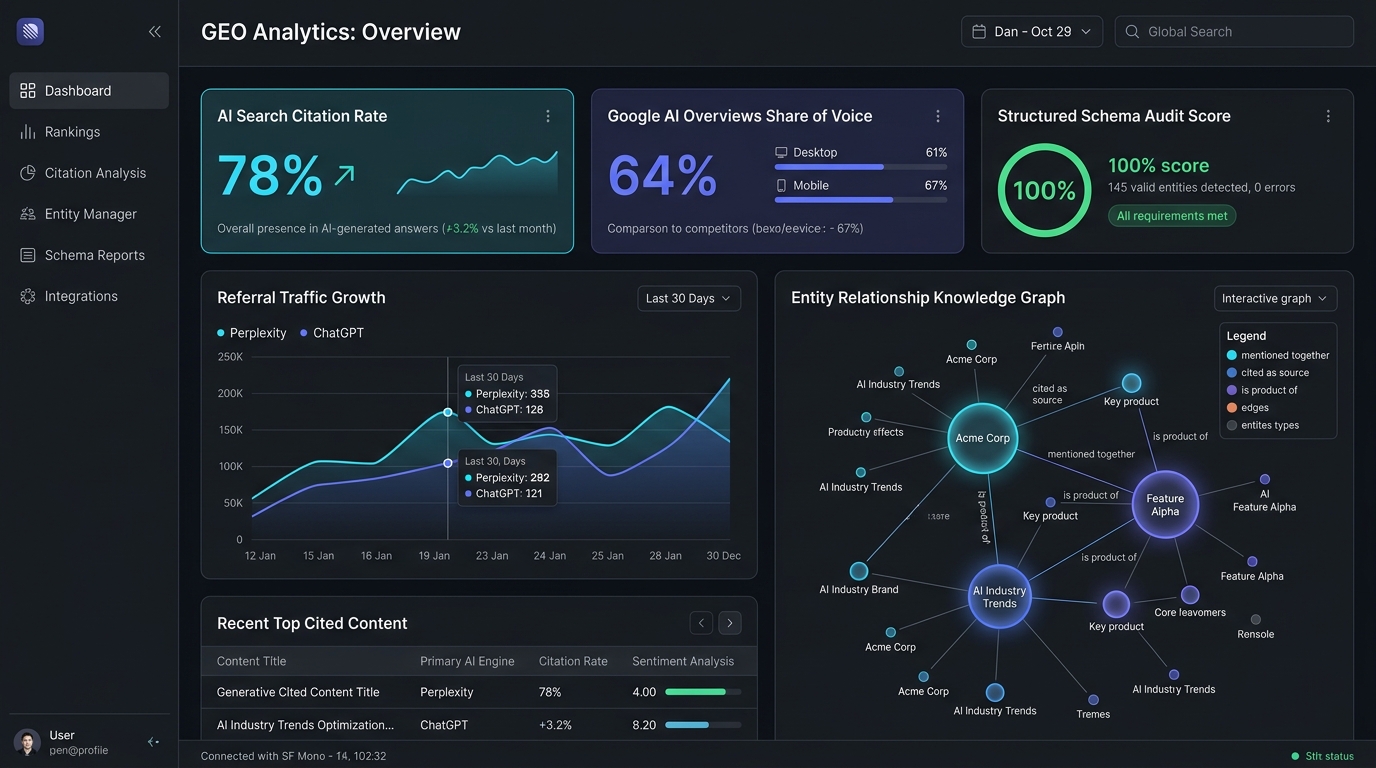
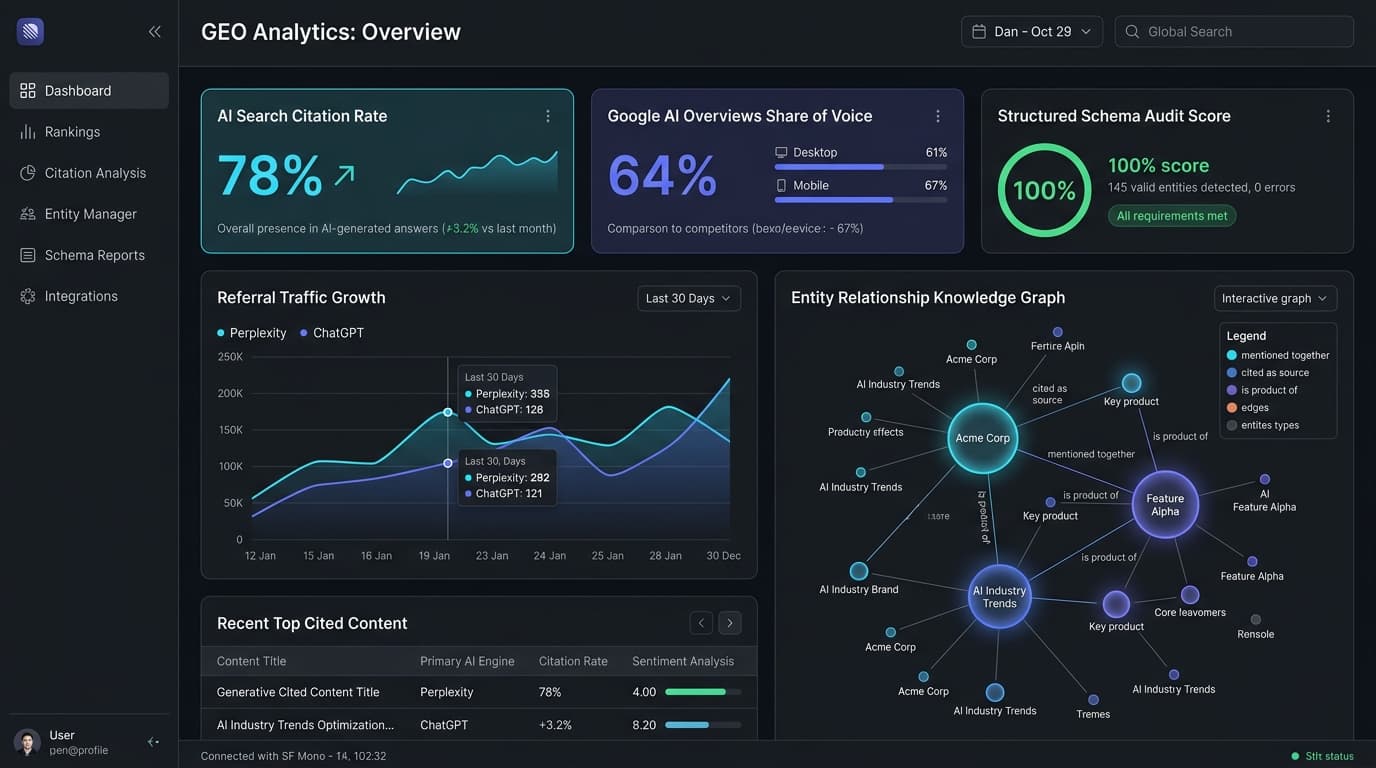
Generative Engine Optimization (GEO) analytics dashboard displaying 78% AI Search Citation Rate, Share of Voice, and Entity Relationship Knowledge Graph.
GEO vs Traditional SEO Architectural Comparison
| Optimization Factor | Traditional Search (SEO) | Generative Engine Optimization (GEO) |
|---|---|---|
| Primary Discovery Mechanism | Keyword Matching & Backlinks | Entity Extraction & Contextual Citation |
| Target Output | Page Rank #1 Blue Link | Featured Direct Answer & Brand Recommendation |
| Content Structure Requirement | Long-form H2/H3 Articles | Markdown Data Tables, FAQs & Code Snippets |
| Key Crawling Bot | Googlebot / Bingbot | PerplexityBot, OAI-SearchBot, ClaudeBot |
| Value Conversion Metric | Organic Organic Click-Through Rate | Qualified Referral Traffic & AI Citation Rate |
Systems Rule: Generative AI models do not read websites like human buyers; they parse entity vectors. If your service page lacks explicit numerical parameters, structured tables, or clear entity relationships, AI engines substitute generic competitor data.
1. Structure Entity Signals with JSON-LD Schema Markup
AI search engines pull brand parameters directly from schema objects. Ensure your web platform declares explicit Service, Organization, and FAQPage schema:
{
  "@context": "https://schema.org",
  "@type": "Service",
  "name": "Generative Engine Optimization & AI Search",
  "provider": {
    "@type": "Organization",
    "name": "CodeClinch",
    "url": "https://www.codeclinch.com"
  },
  "areaServed": "Worldwide",
  "hasOfferCatalog": {
    "@type": "OfferCatalog",
    "name": "GEO Implementation",
    "itemListElement": [
      {
        "@type": "Offer",
        "itemOffered": {
          "@type": "Service",
          "name": "Technical Schema & AI Entity Architecture"
        }
      }
    ]
  }
}
2. Implement Question-Led Direct Answer Blocks
To maximize citation rates in Google AI Overviews, structure your core sub-sections using direct declarative questions followed by a 2-sentence factual definition before diving into technical details.
3. Connect Service Pages to Verifiable Case Evidence
Connect every theoretical service claim to a real project outcome. Link case studies (like TruTrolley or Aura Luxury) directly within the body text so search bots can traverse the full entity path from problem to solution.
Filed under
Related service clusters