
The Short Answer
Website speed is both a Google ranking signal and a commercial conversion engine. Every 100ms of latency reduction directly improves mobile form completion and reduces bounce rates.

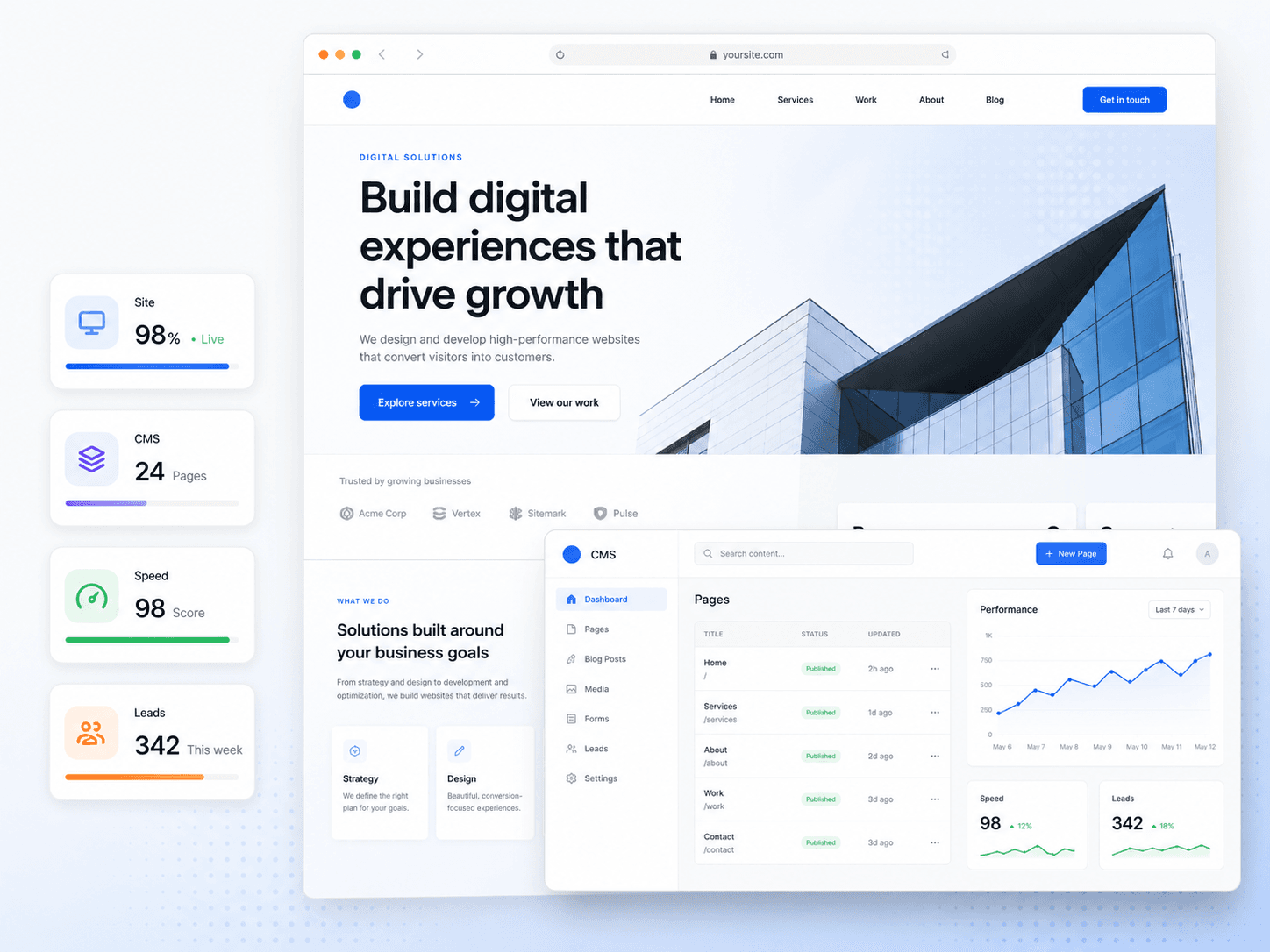
Sub-second LCP desktop storefront interface with edge caching and zero layout shift.
Core Web Vitals Performance Benchmarks
| Metric | Google Good Threshold | Poor Threshold | CodeClinch Target | Commercial Impact |
|---|---|---|---|---|
| Time to First Byte (TTFB) | < 0.8s | > 1.8s | < 0.1s | Faster bot crawl budget utilization |
| Largest Contentful Paint (LCP) | < 2.5s | > 4.0s | < 0.9s | +18% higher landing page conversion |
| Interaction to Next Paint (INP) | < 200ms | > 500ms | < 15ms | Instant tap & scroll feedback |
| Cumulative Layout Shift (CLS) | < 0.10 | > 0.25 | 0.00 | Zero mis-clicks or accidental navigation |
Performance Rule: Performance cannot be patched at the end of a project. It must be built into the component architecture from day one.
1. Eliminate Client-Side JavaScript Bloat
Replace heavy client-side state frameworks with native React Server Components. Ship zero JavaScript to the browser for static marketing and content sections.
Filed under
Related service clusters