


Let me be honest with you: most "web trend" articles tell you the obvious stuff. "Mobile is important." "Speed matters." Cool — thanks, we've known that since 2015.
This post isn't that.
What we're covering today are the trends that are actively rewriting the rules of how websites are built, experienced, and judged — by both users and search engines — right now in 2026. Whether you're a business owner, a startup founder, or someone who just spent ₹2 lakhs on a website that isn't getting results, this piece was written for you.
Let's get into it.
Why Your 2023 Website Is Already Outdated
Here's a uncomfortable truth: the website you launched three years ago is probably hurting you more than helping.
I don't mean this to be harsh. But the standards for what constitutes a "good" website have shifted significantly. Visitors now expect near-instant load times, personalized experiences, and seamless interactions across every device and platform. The bar has been raised — not just by big tech companies, but by the hundreds of millions of modern websites that have set a new baseline for what "normal" looks like.
Between Google's ongoing improvements to its ranking systems and a global audience of increasingly tech-savvy consumers, a flat, slow, or generic website isn't just "suboptimal" anymore — it's a silent conversion killer.
So, what does a future-proof website look like in 2026? Let's walk through it.
Trend 1: AI Is Baked Into the Development Process — Not Bolted On

A couple of years ago, when people said "AI website," they meant a chatbot in the corner of the screen that answered FAQs with painfully robotic responses.
In 2026, that's almost laughably outdated.
AI is now deeply embedded into how websites are:
- Designed — AI tools generate layout options based on brand guidelines and conversion goals, cutting design iteration time from weeks to hours.
- Coded — Developers use AI co-pilots that can write, review, and debug entire feature blocks. What used to take a junior developer three days might take a senior one three hours.
- Personalized — Websites now adapt their content, CTAs, and even visual styling dynamically based on who is browsing. Return visitor from Mumbai? Show prices in INR and surface case studies from Indian clients. First-time visitor from Germany? Lead with social proof from European brands.
- Optimized for SEO — AI-driven content analysis now identifies keyword gaps, content structure weaknesses, and schema opportunities at scale — automatically.
For business owners, this means one big thing: the cost of building smart, high-performing websites is coming down, and the results they deliver are going up. The gap between a basic website and a powerful digital engine is closing — and the agencies that know how to harness AI in their workflow are the ones worth working with.
What this means for your business: When evaluating web development partners, ask them: How are you using AI in your development and optimization workflow? If the answer is vague or they look surprised by the question, look elsewhere.
Trend 2: Core Web Vitals Are Non-Negotiable Now
Look, we've been saying "speed matters" for years. But in 2026, Google's Core Web Vitals system — which measures loading performance, visual stability, and interactivity — has become a formal ranking gate.
You can have the best content in the world. If your website:
- Takes longer than 2.5 seconds to show its main content (LCP)
- Shifts visually while loading (CLS)
- Takes longer than 200ms to respond to a user click (INP)
…you are being ranked lower than websites that perform better on these metrics. Period.
This has forced a real reckoning in the industry. Beautiful websites that were slow are being rebuilt. Agencies that used to build gorgeous-but-bloated WordPress sites are finding their clients' traffic tanking.
The most common causes of poor Core Web Vitals in 2026:
- Unoptimized images (still the #1 culprit)
- Too many third-party scripts loading on every page
- No server-side rendering or edge delivery
- Poor font loading strategy
- No lazy loading for off-screen content
What this means for your business: Before you commit to any website rebuild or new build, insist on a performance commitment. A serious agency will be able to tell you their expected Lighthouse scores and how they plan to achieve them. At CodeClinch, we target a score of 90+ on all Core Web Vitals as a baseline — not a stretch goal.
Trend 3: Mobile-First Is Now Mobile-Only (Almost)
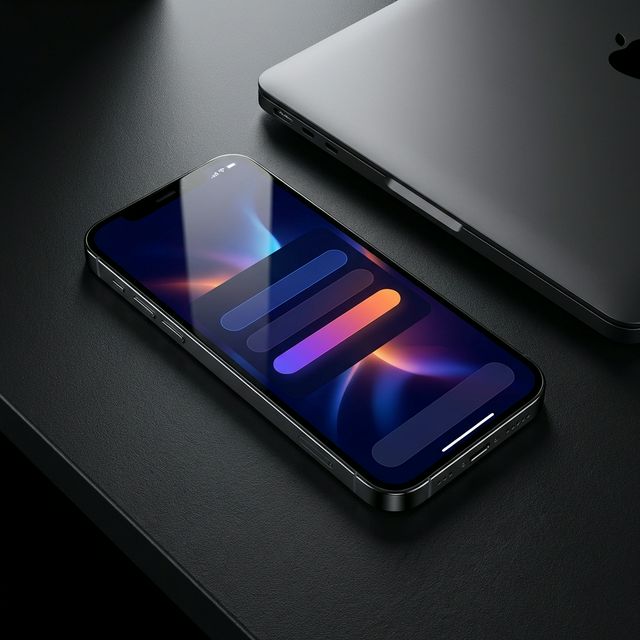
Here's a stat that should reframe how you think about your website: globally, over 63% of all web traffic now comes from mobile devices. In markets like India, that figure is closer to 78%.
We've been talking about "mobile-first" design since around 2015. But there's a meaningful difference between responsive design and genuinely mobile-first design.
Responsive design means: we built a desktop website and made it shrink to fit small screens.
Mobile-first design means: we designed the entire experience for a 390px screen first, then scaled it up for larger displays. Every tap target, every font size, every layout decision was made with thumbs in mind, not mouse cursors.
In 2026, the websites winning in mobile-heavy markets are the ones that embrace this distinction. They don't just rearrange their desktop layout — they rethink the entire user journey for small screens.
Key elements of truly mobile-first design in 2026:
- Large tap targets (minimum 44×44px, per Apple's HIG)
- Bottom navigation patterns (thumbs reach down easier than up)
- Single-column content with no horizontal scrolling
- Preferring native-feeling micro-interactions over complex hover effects
- Sub-2-second First Contentful Paint on 4G networks
What this means for your business: Pull out your phone right now. Open your website. If you have to pinch-to-zoom, if text is tiny, or if buttons are hard to tap — you're losing mobile conversions every single day.
Trend 4: Core Web Performance — The Speed Arms Race

Performance beyond just Core Web Vitals is becoming a true competitive differentiator. In 2026, edge computing has gone mainstream.
Instead of hosting your website on a single server in, say, Singapore, modern web architectures distribute your site's code and content across dozens of global edge nodes. When someone in Jaipur visits your site, they're served by a node in Delhi — not one across the ocean.
The technical terms: Edge Functions, CDN-first architectures, server-side rendering at the edge, and Incremental Static Regeneration have moved from "advanced features of cutting-edge startups" to "table stakes for serious businesses."
Real-world impact:
- Global average page load times dropped from 3.2 seconds (2022) to under 1.4 seconds for optimized edge-deployed websites (2026).
- Amazon's internal research showed a 1% increase in revenue for every 100ms improvement in page load time. At scale, that's enormous. But even for smaller businesses, the principle holds: faster = more trust = more sales.
What this means for your business: Ask your web agency where your website is hosted and how it's delivered. If the answer is "shared hosting" or "a single VPS server," that's a red flag. Modern hosting infrastructure (Vercel, Cloudflare, AWS CloudFront, etc.) should be part of your deployment stack.
Trend 5: Website Security Is a Business Reputation Issue

In 2023, a data breach was a PR issue.
In 2026, a data breach involving your customers' information can result in regulatory fines, permanent reputational damage, and in some markets, legal liability.
Beyond the extreme cases, even smaller security failures — expired SSL certificates, outdated plugins, vulnerable dependencies — actively affect your SEO rankings. Google has gotten increasingly aggressive about flagging and demoting websites with security issues.
The most common website security vulnerabilities in 2026:
- Outdated CMS plugins and themes — WordPress sites with unmaintained plugins remain the most commonly exploited attack vector.
- No rate limiting on forms — contact forms, login pages, and comment sections without rate limiting are trivially spammed and attacked.
- Exposed admin panels — default
/wp-adminURLs, default credentials, and no 2FA are all open invitations. - Missing security headers — CSP, HSTS, X-Frame-Options, and similar HTTP headers are easy to implement but frequently skipped.
- No bot protection — malicious bots account for over 30% of all internet traffic. If your site has no bot filtering, you're letting them crawl, scrape, and probe freely.
What this means for your business: Good security isn't a one-time setup — it's ongoing maintenance. If you don't have a monthly security audit process, you have a vulnerability. A modern website should include HTTPS, regular dependency updates, admin protection, form rate limiting, and automated vulnerability scanning as standard features.
Trend 6: Hyper-Personalization Without Being Creepy
This is one of the most nuanced trends of 2026, and it's one that most businesses are getting wrong in one of two ways:
Too generic: "Welcome to our website. Here are our services."
Too invasive: Using third-party data, behavioral tracking, and retargeting in ways that feel surveillance-like and erode trust.
The sweet spot — what top brands are nailing in 2026 — is contextual personalization that uses first-party data (data the user has willingly provided) to serve a more relevant experience, without feeling like you're being watched.
Examples of contextual personalization done right:
- Showing different CTAs to returning visitors vs. first-time visitors
- Surfacing the most relevant service or product categories based on how someone arrived at your site (e.g., Google Ad landing pages vs. blog referrals)
- Adjusting the tone and complexity of content based on whether someone has interacted with technical content before
- Remembering form preferences to reduce friction on return visits
The key is transparency and restraint. Users will accept personalization if it clearly benefits them and isn't built on data they didn't knowingly share.
What this means for your business: Build a website that's smart about who it's talking to, without being invasive about how it knows. Invest in first-party data collection (newsletter signups, account creation, quote forms) and use that to deliver meaningfully better experiences.
Trend 7: Accessibility Is Now Both a Legal and SEO Requirement
Accessibility — designing websites usable by people with disabilities — has been "best practice" for years. In 2026, it's increasingly becoming a legal requirement in many markets, and a formal ranking signal.
WCAG 2.2 compliance (Web Content Accessibility Guidelines) is the current baseline. It covers:
- Perceivable: Sufficient color contrast, text alternatives for images, captions for videos
- Operable: Full keyboard navigation, no content that flashes more than 3 times per second
- Understandable: Clear language, consistent navigation, form error messages that actually explain what went wrong
- Robust: Code that works with screen readers and assistive technology
Beyond the legal compliance angle, accessible websites genuinely perform better. They tend to have cleaner code, clearer content hierarchy, and more predictable navigation — all things that both users and search engine crawlers appreciate.
What this means for your business: When you audit or commission a new website, include an accessibility audit as part of the scope. It's not just the ethical choice — it's becoming the business-critical one.
What This All Means: The Business Owner's Checklist
If you've read this far, you're clearly serious about staying ahead. So let me give you something actionable.
Here's a quick self-audit to see how future-proof your current website is:
| Area | Question to Ask |
|---|---|
| Performance | Does your site score 90+ on Google PageSpeed Insights? |
| Mobile | Is your site designed mobile-first, or just mobile-responsive? |
| AI Integration | Does your site use any AI-driven personalization or content tools? |
| Security | When was your last security audit? Are all plugins/dependencies current? |
| Accessibility | Has your site been tested against WCAG 2.2 standards? |
| Edge Delivery | Is your site deployed on edge infrastructure (Vercel, Cloudflare, etc.)? |
| Analytics | Are you tracking Core Web Vitals in Google Search Console? |
If you answered "I'm not sure" or "No" to more than half of these, your website is already falling behind the curve.
Final Thought: The Cost of Standing Still
The web moves whether you're ready or not.
Businesses that treat their website as a "set it and forget it" asset are losing ground every month — to competitors who are investing in performance, to algorithm updates that favor better experiences, and to a user base whose expectations keep rising.
Future-proofing your website isn't a one-time project. It's an ongoing commitment to the infrastructure that represents your business in the largest marketplace that has ever existed.
The good news? It's never been easier to build something genuinely world-class. The frameworks are more powerful. The infrastructure is more accessible. The knowledge is more democratized.
You just need the right team to put it all together.
At CodeClinch, we build digital experiences that perform today and scale into tomorrow. If you're ready to evaluate your current website or start something new, let's have a conversation.
Tags: web development trends 2026, AI website development, Core Web Vitals optimization, mobile-first web design, website security, edge computing India, future-proof website, website performance optimization
Related Resources
- Web Platform Development - Relevant service page for readers evaluating implementation options.
- Custom Ecommerce Builds - Relevant service page for readers evaluating implementation options.
- Why Your Website Speed is Killing Conversions (And How to Fix It) - Related reading that deepens the topic cluster.
- How to Launch a Profitable Ecommerce Store in India (2026 Edition) - Related reading that deepens the topic cluster.
Decision-Stage Takeaways
When choosing a web development partner for 2026, focus on how they integrate AI, performance, and future‑ready architecture into their workflow. These factors directly impact load times, user experience, and search visibility—key drivers of conversion and ROI.
- Ask how AI is used throughout design, coding, personalization, and SEO optimization—not just as a chatbot add‑on.
- Require a measurable commitment to Core Web Vitals (LCP < 2.5 s, INP < 200 ms, CLS < 0.1) and request proof of testing on real devices.
- Verify they employ modern delivery methods such as server‑side rendering, edge computing, and automated image/font optimization to avoid costly rework later.
Selecting a team that treats AI and performance as core competencies ensures your site stays competitive, ranks well, and converts visitors into customers now and as web standards evolve beyond 2026.
Related service clusters