
Starting an ecommerce business in India is not mainly a website decision. It is a margin, product, fulfilment, and customer-trust decision. The website connects those pieces, but it cannot rescue a product with weak demand or an order that loses money after shipping and returns.
If you are at the idea stage, start with a small test: one customer group, a narrow product range, and one clear reason to buy from you. Learn which products people actually pay for before investing in a large catalogue or custom technology.
The short answer
To start an ecommerce business in India in 2026:
- Choose a focused product category and customer.
- Validate demand with real conversations, pre-orders, or a small marketplace test.
- Calculate contribution margin after product cost, packaging, shipping, payment fees, returns, and advertising.
- Complete the registrations and tax setup that apply to your business with a qualified accountant or legal adviser.
- Launch a fast mobile storefront with clear product, delivery, return, and contact information.
- Offer the payment methods your customers expect, including UPI and carefully controlled cash on delivery where appropriate.
- Track the full order journey and improve one bottleneck at a time.
The rest of this guide explains how to make each decision without overbuilding.
1. Pick a niche you can explain in one sentence
“We sell products online” is too broad. A useful niche combines a defined customer, a recurring problem or desire, and products you can source reliably.
Before committing, speak with potential buyers and compare the alternatives they use today. Read low-star reviews on competing products to learn where expectations are not being met. Then test a small assortment instead of ordering a full catalogue.
Good validation questions include:
- Who is the product specifically for?
- What makes them look for it now?
- Why would they buy from a new store instead of a known marketplace?
- Can the product survive shipping and returns?
- Is there room for repeat purchases, bundles, or referrals?
Avoid selecting a niche only because a trend report calls it profitable. A category can be growing while an individual seller still struggles with sourcing, price competition, or expensive returns.
2. Check the unit economics before choosing a platform
Revenue is not profit. For each order, estimate the money left after every variable cost. This is your contribution margin—the amount available to pay salaries, software, rent, and other fixed costs.
Here is an illustrative order, not an industry benchmark:
| Item | Example amount |
|---|---|
| Selling price collected | ₹2,000 |
| Product or landed cost | -₹800 |
| Packaging and forward shipping | -₹180 |
| Payment, COD, and return reserve | -₹180 |
| Customer acquisition | -₹350 |
| Contribution before fixed costs | ₹490 |
Run the same calculation for a normal order, a discounted order, and a returned order. If the model only works when every customer prepays, no order is returned, and ads stay unusually cheap, the plan needs another pass.
Look for practical ways to improve the economics: a higher average order value, sensible bundles, lighter packaging, better product information, lower return risk, or repeat purchases that do not require another full acquisition cost.
3. Set up the business and policies properly
Your exact registrations depend on the business structure, location, products, turnover, and where you sell. GST, invoicing, consumer-protection, product-labelling, and marketplace requirements can change, so confirm the current position with a chartered accountant or qualified adviser before launch.
On the storefront, make the commercial terms easy to find:
- Business name and contact details
- Shipping coverage and estimated delivery times
- Cancellation, return, refund, and exchange rules
- Privacy policy and terms
- Taxes, fees, and final payable amount
- Product warnings, size information, or care instructions where relevant
These pages are not decorative footer links. They answer the questions a first-time customer asks before trusting a new brand.
4. Choose the simplest technology that supports the operation
A hosted platform can be the right first step for a small catalogue and standard order flow. A custom build becomes useful when the business needs unusual pricing, multiple vendors, delivery zones, role-based dashboards, deep integrations, or a customer journey that templates cannot support cleanly.
Choose based on the next 12–18 months of operational needs, not on fashionable architecture. A fast, well-configured store is more valuable than a complex stack your team cannot maintain.
At minimum, the storefront should include:
- Mobile-first category and product pages
- Search and filters that match how customers shop
- Clear stock, variant, size, and delivery information
- A short checkout with no surprise charges
- Order confirmation and tracking
- An admin workflow for products, orders, offers, returns, and customer support

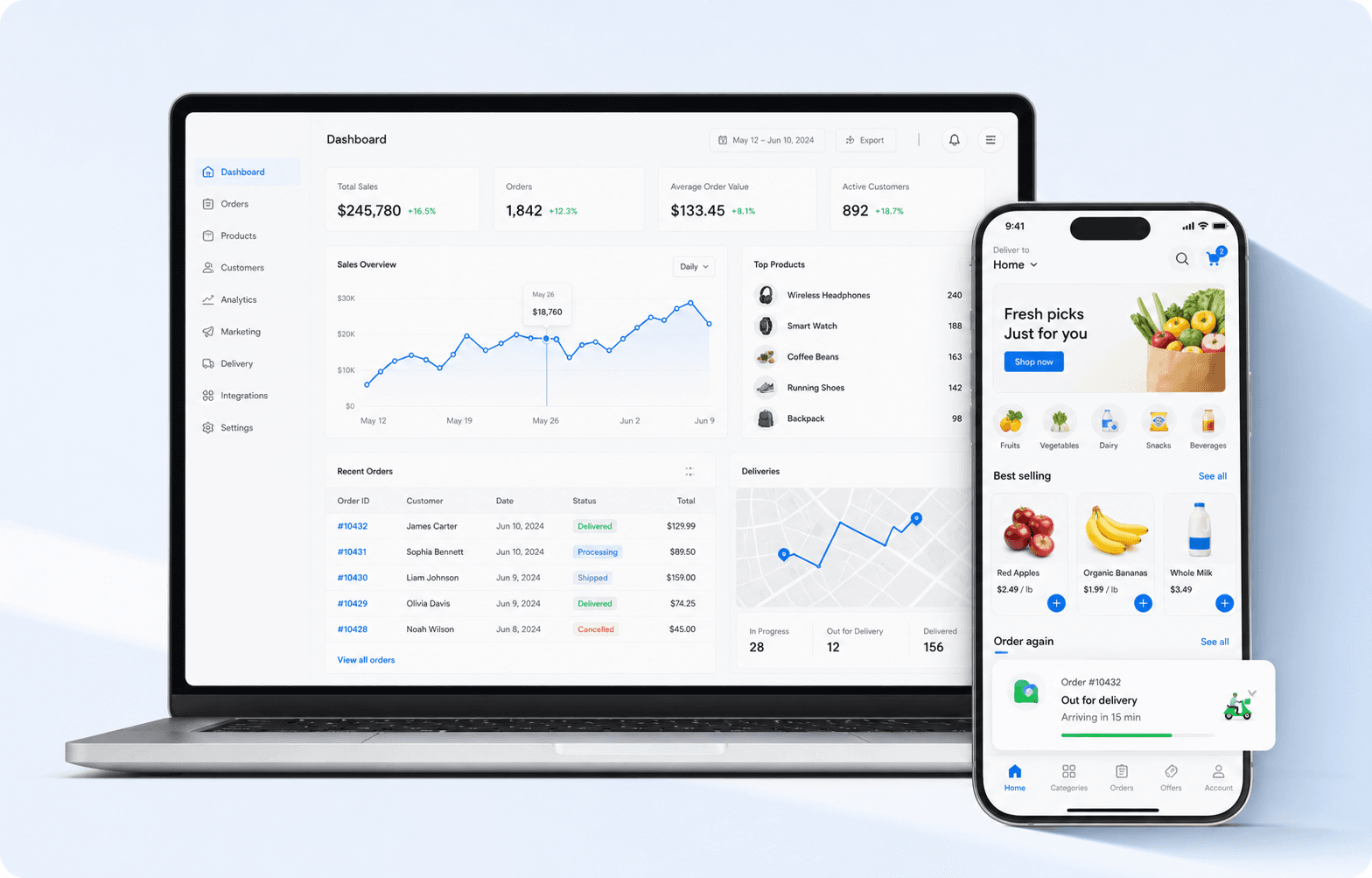
A real mobile commerce interface from our TruTrolley project. The customer journey and the operating workflow were designed together.
5. Treat UPI, cards, and COD as business rules
The best payment mix depends on your audience and order value. UPI and cards make prepayment convenient. Cash on delivery can help customers who are not ready to prepay, but it also creates confirmation, cash-handling, and return-to-origin risk.
Do not enable COD everywhere by default. Consider serviceable PIN codes, order value, customer history, confirmation steps, and whether a small prepaid amount makes sense for your model. The goal is not to block genuine buyers; it is to avoid accepting orders the operation cannot fulfil profitably.
Always test successful payments, failed payments, duplicate callbacks, refunds, cancelled orders, and delayed confirmations before running campaigns. A clean-looking checkout is not enough if the order state becomes unreliable after payment.
6. Design shipping and returns before promising delivery dates
Shipping starts with product weight, dimensions, packaging, pickup location, delivery coverage, and return handling. Compare providers using the lanes and order sizes you actually expect rather than a headline rate.
Your system should know:
- Whether a PIN code is serviceable
- The expected dispatch time
- The shipping charge or free-shipping threshold
- Which status customers and staff can see
- What happens when delivery fails
- How a return, replacement, or refund is approved
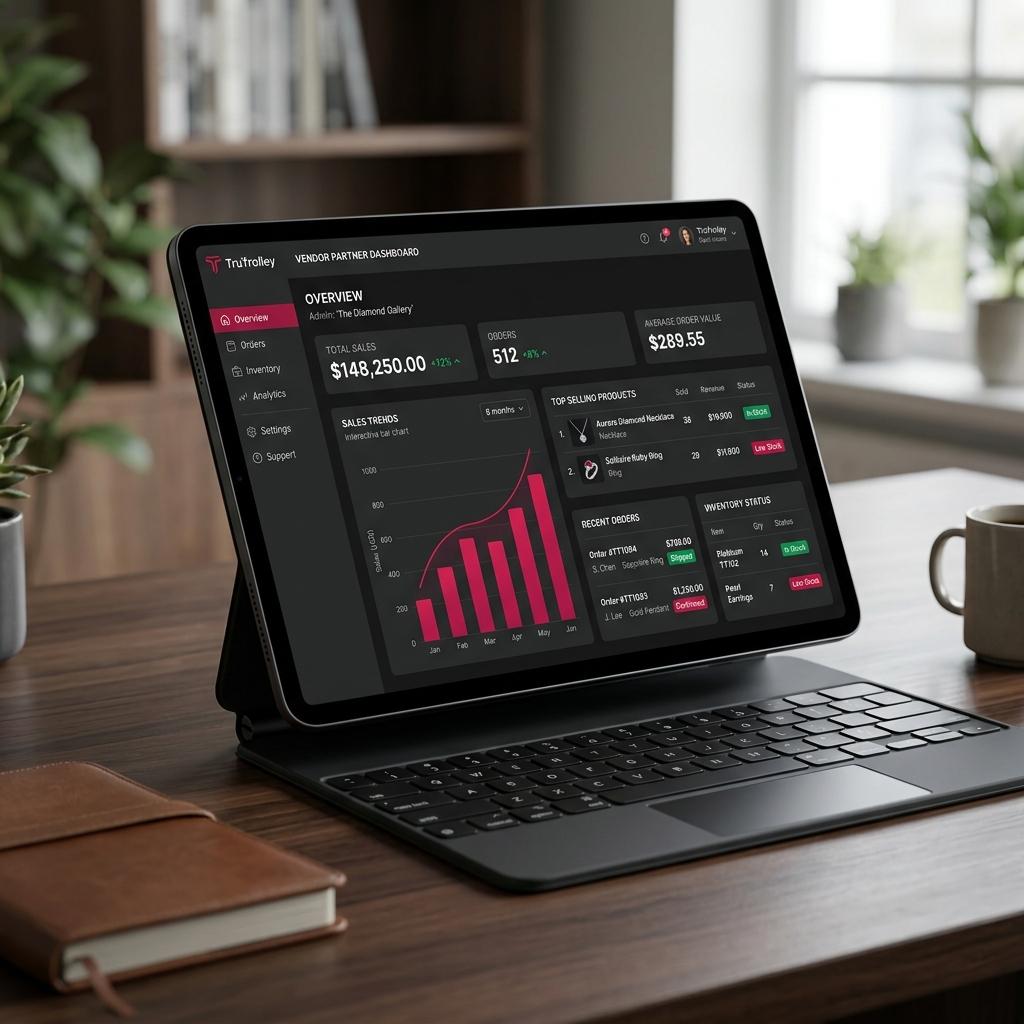
The vendor side matters as much as the storefront: products, stock, orders, offers, and fulfilment need a usable daily workflow.
If your model includes vendors or local delivery, map responsibility for stock, packing, assignment, handoff, proof of delivery, cancellation, and settlement before development begins. Our TruTrolley case study shows how those customer and operational surfaces fit together.
7. Build product pages that answer real buying questions
Do not copy supplier descriptions. Write from the customer's point of view: what the item is, who it suits, how it feels or works, what is included, how to choose the right variant, and when it will arrive.
Use original photos where possible. Show scale, texture, packaging, and the product in use. Add a concise FAQ only when it answers genuine objections. Reviews should be attributable to real customers and should never be invented for search markup.
For search visibility, create a clean category structure and use descriptive product names, headings, internal links, image alt text, and structured product data that matches what shoppers can see. Publishing dozens of near-empty category or topic pages usually creates noise instead of demand.
8. Measure the order journey, not vanity traffic
Set up analytics before launch and verify that it records the steps that matter. For most stores, the useful funnel is:
- Product or category viewed
- Product added to cart
- Checkout started
- Payment attempted
- Purchase completed
- Order delivered, cancelled, or returned
Review the funnel by device, source, product, payment method, and location. A high-traffic page with no product views is a different problem from a checkout with repeated payment failures.
Talk to customers as well. Support messages and return reasons often explain friction faster than a dashboard.
A practical 90-day launch plan
Days 1–30: validate
- Select one customer group and a focused range.
- Interview buyers and review competing offers.
- Get sample products and test packaging.
- Build the unit-economics sheet.
- Confirm the registrations, tax treatment, and policies that apply.
Days 31–60: build the operating minimum
- Photograph products and write original product information.
- Configure the storefront, payments, shipping, policies, analytics, and support channel.
- Test the full order journey on real phones.
- Run internal test orders, including cancellation and refund cases.
Days 61–90: launch small and learn
- Start with a limited audience or geography.
- Watch fulfilment, payment, cancellation, and return patterns.
- Improve the weakest stage of the funnel.
- Add products and automation only after the basic order flow is stable.
Common mistakes to avoid
- Buying too much inventory before validating demand
- Calculating margin without advertising, returns, or failed-delivery costs
- Launching a large catalogue with weak product information
- Choosing technology before mapping the operating workflow
- Offering COD or free shipping without clear business rules
- Running ads before payment, fulfilment, support, and analytics are tested
- Publishing generic SEO pages instead of useful category and product content
What to do next
Start with a one-page operating brief: customer, products, price range, sourcing, margin, payment methods, shipping coverage, return policy, and the first 90-day target. That document will make the website decision much easier.
If your store needs custom checkout, delivery logic, vendor operations, or a connected admin system, review our custom ecommerce development service. If you already have the business model and want a technical scoping session, tell us what you are building.
Related service clusters